Around Enghelab Square
One
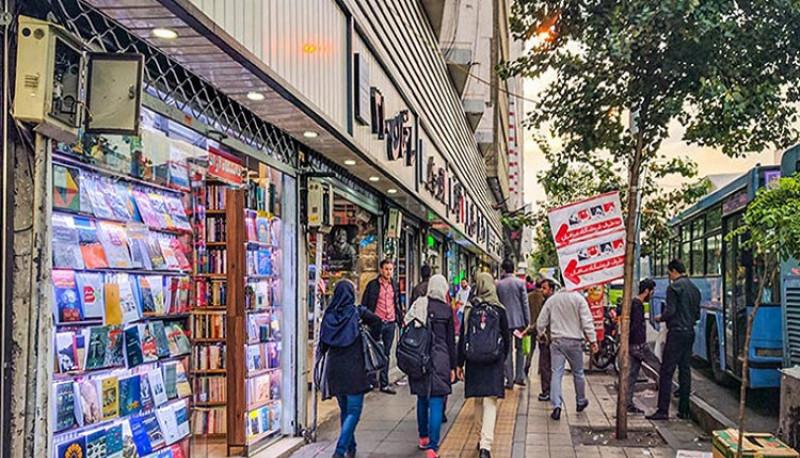
It is the mid 1990s, and I often find myself passing through Enghelab Square. Along that dreamlike stretch of bookstores between the square and Azerbayjan Street, somewhere across from the gate of the University of Tehran, I keep noticing a young man with green eyes and rosy cheeks. His gaze is always fixed on some unknown point. In heat and cold alike, he watches passersby for potential customers or holds up a piece of cardboard inviting them to buy rare books.
At the time, the trade in forbidden books, plain covered editions, and piles of secondhand volumes had not yet become commonplace along that strip.
Their bookstore occupies a run down building, a ground-floor shop with a few steps leading up to it, seemingly added only for appearances’ sake.
Only once does curiosity get the better of me and I step inside, though I buy nothing. They mostly carry old and secondhand books.
For several years afterward, I rarely pass that way. Both my home and university move elsewhere.
Then, one day, years later, as I walk along the same sidewalk in the middle of the day, I see that the green eyes and rosy face are still there. The only addition is a relatively long beard, colored in an orange hue.
Later, the old building is demolished and replaced by a modern shopping arcade. The sellers of rare books scatter and multiply, taking up residence in other little dens and along the sidewalks of the same street.
Two
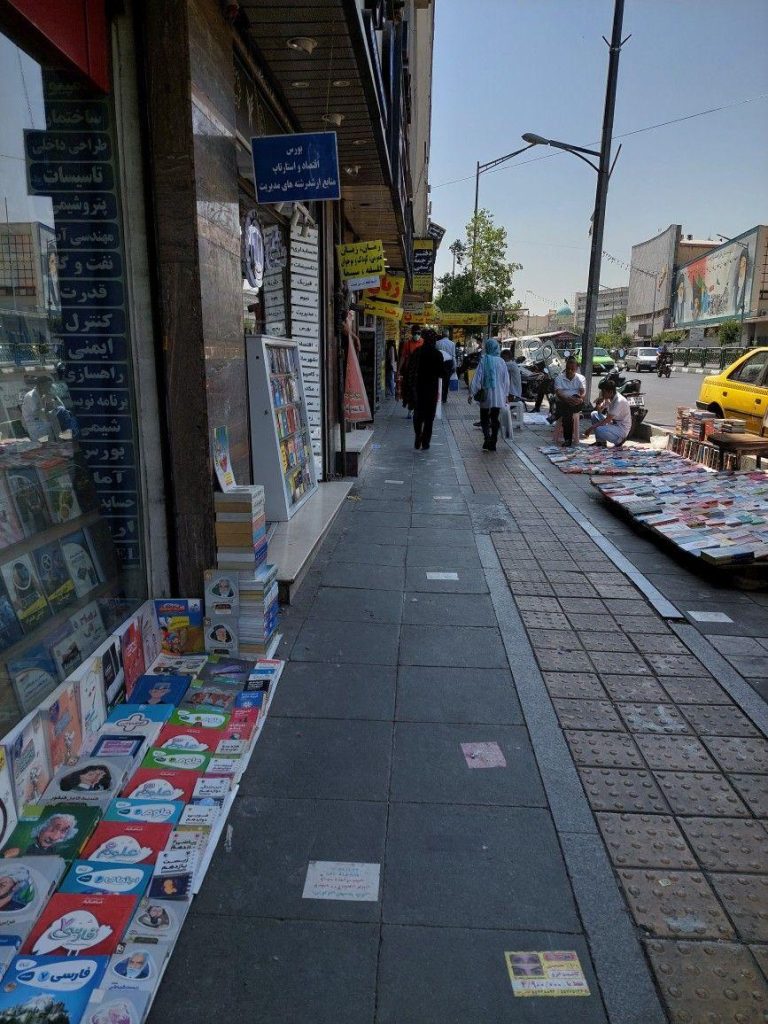
At the southwestern edge of Laleh Park, there is an open paved area. I live nearby and often pass through that corner of the city.
A few small structures with metal frames stand slightly raised above the concrete, twenty or thirty centimeters off the ground. Their walls are entirely glass, making them look like cube shaped aquariums. One of them is a bookstore, apparently connected in some way to Soroush Publications of the Art Bureau. It is unlike most bookstores run by the state; however, it feels open and welcoming. It keeps longer hours than ordinary government offices and carries books from almost every publisher.
I go there often just to browse. Sometimes I buy discounted books or old, inexpensive editions on cinema, literature, and fiction.
One evening, while wandering around with a few friends, I lead them there and, in a sense, become an unofficial tour guide for the little bookstore. At one point, I place Gavkhouni in the hands of one of them and ramble on about everything I know and don’t know about the Persian novel. I mention that it has recently been selected as one of the “Twenty Years of Iranian Books” and introduce its author, Jafar Modarres-Sadeghi.
Later, that same friend seeks out Modarres-Sadeghi. They become acquainted, then close friends. The friend himself goes on to become a capable writer and publishes several novels.
A few years later, the glass cubes are removed. Only their outlines remain on the concrete.
Now the site has become part of the construction area for Laleh Park Metro Station, and even the empty space where that glass bookstore once stood can no longer be seen.
Written by Hossein Ahmadian
Hossein Ahmadian is a graduate of theatre studies from the University of Tehran.