Bookstores of Iran
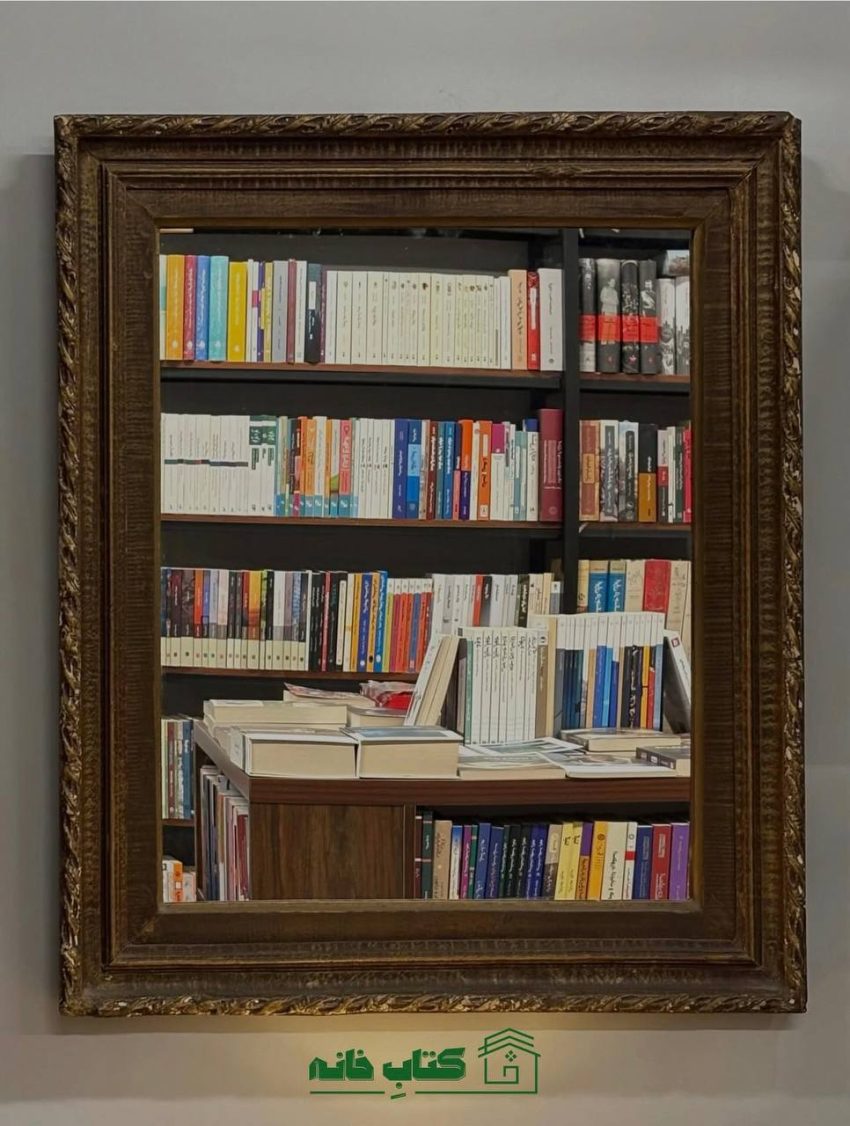
A bookstore in Tehran
A long time ago, when even the thought of war had not yet crossed our minds, I asked friends and acquaintances to write down any memories they had of the bookstores in their neighborhoods. For our generation, who spent our youth without the internet, bookstores were a bridge to a distant, unfamiliar world.
Later, many of those bookstores disappeared, whether for cultural or economic reasons, or were transformed into something else. And perhaps, with the passing of years, they too will fade from our collective memory.
My intention in gathering these writings in these days of horror is not to create a research document, but rather to offer a narrative of our being, of a time not so long ago, when books and films were like windows that held fragments of light.
First Memory: From Shiraz
The first thing the word bookstore sets ablaze in my memory is my childhood town, Ashkanan, and an alley called Kenar-e Pir, haunted by tales of jinn and fairies. As we drifted to sleep to the storytelling of our grandmothers, our hands tingling beneath our heads, all our dreams were woven with visions of fairies and the dread of frightful jinn.
At the end of the alley stood the old kenar tree, settled there as a dwelling for jinn in the nights, adorned with strips of colorful cloth tied to its dense branches for wishes as a sacred tree by day, yet as soon as night fell, the darkness of the alley fed the imagination so fiercely that beside the dim glow of a kerosene lamp, the one the people of Ashkanan called a barasāti lamp, we would see dozens of jinn, tall and small. Woe to the nights when we had to pass beneath it to visit a friend. I think I had memorized part of the thirtieth juz’ of the Qur’an just to make it safely through the far end of the alley after dark.
And yet, when the Qaemieh Bookstore was destroyed, which was hardly surprising in those days, a group of children, none older than fifteen, set up a worn little room facing the ruins, directly across from that same Kenar tree. With plaster, paint, shelves, and whatever else we could gather, we declared that we would build a bookstore, and we did.
The Qaemieh Bookstore had once been one of the largest in the region, but after the Revolution, it was gradually plundered, with accusations like this book being declared misguided, that one harmful to the souls of the young, and so on. It did not take long before Ashkanan had no bookstore at all. And it seems the saying is true: “A land without bookstores and theaters is a land without a soul.”
So we set to work. We were only a few children, convinced that by building a bookstore, we had saved the town. We did not yet know that the fate awaiting everything in this land—culture, learning, books, literature, art—was nothing but erasure. How could we have known? We were children, our spirits still restless, still alive with all manner of hopes and dreams. The harsh lash of reality had not yet struck us.
Time passed. By the time I entered university, there was no bookstore left in Ashkanan. The number of books in my own home was probably greater than all the books in the streets and alleys of my town, yet I was not happy. By then, I had come to understand that the sorrow lay precisely in this imbalance.
Ashkanan was more than four hundred kilometers from Shiraz, and to get my hands on books, I had to travel that distance. In those days, the roads were far from smooth, and buses, cars, and planes were far from reliable. I had to wait for the right excuse, someone falling ill, a change in my eyeglass prescription, a wedding or a funeral, anything that would give me a reason to make the journey to Shiraz. And then I could indulge in visiting bookstores that glittered like the flashy casinos of Las Vegas in the movies, tempting and irresistible to me.
Yet more beautiful than those was the path along the Pars Museum wall, near Karim Khan Citadel. The wall behind the museum held a line of books no longer in print, banned from being printed or sold. They were more expensive than legal books, but what could be done? When The Blind Owl by Sadegh Hedayat was nowhere in the bookstores, when One Hundred Years of Solitude was absent from the display, when Yacolia and her Loneliness could only be found on that wall, when Prince Ehtejab had no place in the official shelves, when… when censorship was considered a virtue, what else could I do?
The only way was to survive on one and a half meals instead of three, to buy one shirt or pair of pants instead of several, and to save the rest of my allowance for Hedayat, Golshiri, Saedi, Beyza’i, Márquez, Faulkner, Molière, and the rest of the gang.
It is no coincidence that my first image of a bookstore or library took me back to the end of the alley near Kenar-e Pir, and my last image led me to the edge of the Pars Museum, near the city square and just beyond Karim Khan Citadel. Those were the days when buying One Hundred Years of Solitude or The Blind Owl cost a thousand tomans each, when a hamburger sandwich ranged from eleven to eighteen tomans.
Milad Akbarnejad, born in 1975 in Ashkanan, is a writer and director of theater, radio, short films, and television series. He has been active in multiple artistic fields, including playwriting, screenwriting, directing, and conducting specialized theater workshops, particularly in Shiraz. His body of work includes stage productions as well as written plays.